

Introduction
A business can have a professional website, valuable services, and an attractive brand identity but still struggle to gain visibility in search engines. One reason is that branding and search engine optimisation are often treated as separate marketing activities. In reality, they work best when they support each other.
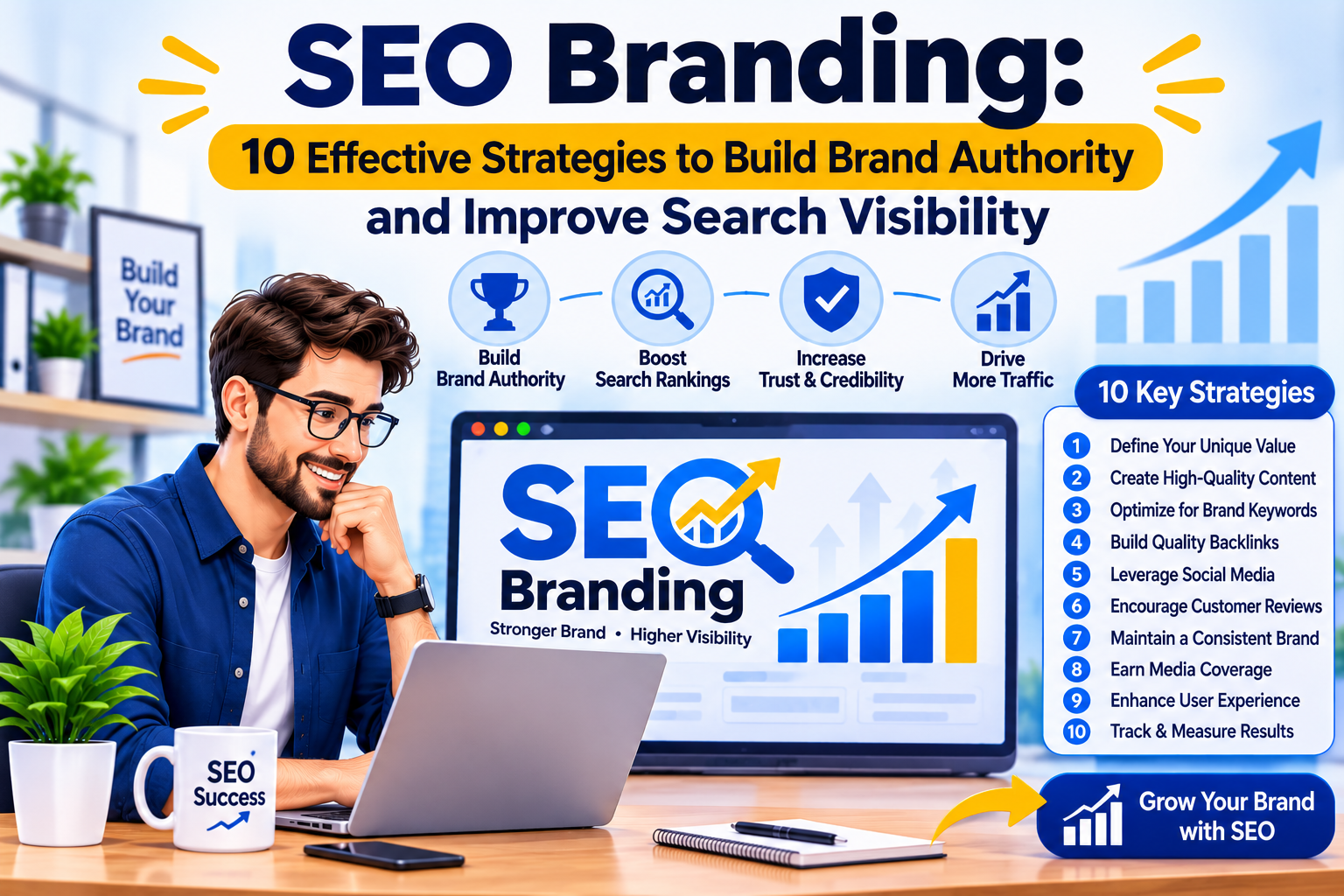
SEO branding combines brand development with search engine optimisation to help businesses become more recognisable, discoverable, and trustworthy online. It involves creating consistent brand messaging, publishing useful content, targeting relevant keywords, and building a strong digital presence across search results and other online channels.
For businesses that want sustainable growth, understanding how branding and SEO work together can improve both organic visibility and customer confidence.
What Is SEO Branding?
SEO branding is the process of strengthening a company's brand identity and online reputation through search engine optimisation, relevant content, and consistent digital communication.
It helps people discover a business when searching for its name, products, services, or industry-related information.
A strong SEO branding strategy focuses on:
Improving visibility for branded and non-branded searches.
Creating consistent brand messaging across digital channels.
Publishing helpful and relevant website content.
Building authority within a specific industry.
Improving website usability and customer experience.
Developing trust through credible information and positive brand recognition.
For example, when someone searches for a company's name alongside a service, the business should ideally provide relevant pages that explain its expertise, services, and value.
SEO branding is not simply about ranking a logo or business name. It is about making the entire online presence easier to discover, understand, and trust.
Why SEO Branding Matters for Business Growth
Brand recognition influences how people evaluate businesses before contacting or purchasing from them. Search visibility determines whether potential customers can discover those businesses in the first place.
Combining both creates several advantages.
1. Increases Brand Visibility in Search Results
A well-optimised website can appear for branded searches, service-related keywords, informational queries, and relevant industry topics.
This creates more opportunities for potential customers to encounter the business during their research.
For example, a company offering digital marketing services may want visibility for searches related to:
Its company name.
SEO consulting services.
Website optimisation.
Content marketing solutions.
Industry-specific SEO questions.
A broader keyword strategy helps the business reach people at different stages of the buying journey.
2. Builds Brand Authority and Customer Trust
People are more likely to consider a business when they can find useful information about its expertise and services.
Consistently publishing accurate articles, detailed service pages, and educational resources helps demonstrate subject knowledge.
However, brand authority should be supported by genuine expertise rather than repeated promotional claims.
Businesses should explain their services clearly, provide useful information, maintain accurate company details, and ensure that website content reflects what they actually offer.
3. Supports Long-Term Organic Growth
Paid advertising can generate visibility while a campaign is active. Organic search provides another way to attract visitors through useful website pages.
A well-maintained content strategy can continue attracting relevant visitors after publication, although rankings and traffic are never guaranteed.
Businesses that combine SEO optimization with consistent branding can build a more recognisable online presence over time.
10 Effective SEO Branding Strategies
1. Establish a Consistent Brand Identity
A strong SEO branding strategy begins with a clear identity.
Your website, social media profiles, business listings, and published content should communicate the same core information.
Important brand elements include:
Business name and logo.
Brand colours and visual identity.
Tone of voice and writing style.
Main products and services.
Target audience and industry.
Company values and positioning.
Consistency makes it easier for visitors to recognise the business across different platforms.
It also helps prevent confusion when customers encounter multiple versions of company information online.
2. Research the Right Keywords for Your Brand
Keyword research helps businesses understand the language potential customers use when searching for information and services.
Start by identifying three main keyword groups:
Branded keywords: Searches containing your business name, product name, or brand variations.
Commercial keywords: Searches related to services, providers, comparisons, and purchasing decisions.
Informational keywords: Searches involving questions, definitions, tutorials, and industry guidance.
For example, an SEO company might target its brand name, phrases such as "SEO consulting services," and educational searches such as "what is SEO and how does it work?"
A free keyword research tool can help identify related search terms and topic opportunities. When comparing the best keyword research tool options, consider search volume estimates, keyword difficulty, competitor analysis, and search intent.
Do not select keywords based only on search volume. Relevance to your services and audience is equally important.
3. Build a Content Strategy Around Your Expertise
Content is one of the strongest connections between branding and SEO.
A structured content strategy allows businesses to publish information that demonstrates expertise while answering questions potential customers are already asking.
Start by selecting several core topics related to your industry.
For an SEO agency, these might include:
Technical SEO.
Local SEO.
Keyword research.
Content optimisation.
Link building.
Website audits.
Search engine marketing.
Develop supporting articles around each topic and connect them through relevant internal links.
Businesses can also explore industry-specific resources and educational content within their SEO and search engine optimisation category.
The objective is to build a useful collection of related resources rather than publishing unrelated articles simply to increase website activity.
4. Optimise Your Website for Search and User Experience
Your website is often the main destination for people discovering your brand through search engines.
It should communicate what your business does, who it serves, and how visitors can take the next step.
Important website SEO elements include:
Descriptive page titles and meta descriptions.
Clear H1, H2, and H3 heading structures.
Relevant internal links.
Descriptive image alt text.
Mobile-friendly page layouts.
Fast and reliable page performance.
Logical navigation and URL structures.
Helpful service and contact pages.
A website SEO checker can help identify technical and on-page issues that need attention.
You can also use a free SEO checker for an initial review, but automated tools should not replace manual analysis. A proper evaluation needs to consider content quality, indexing, search intent, and website usability.
5. Strengthen Your Local SEO Presence
Local SEO helps businesses become more visible when people search for products or services in a particular area.
It is especially useful for companies serving customers within specific cities or geographic regions.
A strong local SEO strategy should include:
An accurate and complete Google Business Profile.
Consistent business name, address, and phone number.
Relevant location-specific website pages.
Genuine customer reviews.
Local business citations.
Relevant local backlinks.
Accurate business categories and service information.
For example, someone searching for local SEO companies may compare several providers based on their services, reputation, location, and website information.
Businesses should avoid creating multiple low-quality location pages with nearly identical content. Each location page should provide genuinely useful information for its intended audience.
6. Create High-Quality SEO Content That Reflects Your Brand
SEO copywriting services can help businesses communicate their expertise while targeting relevant search queries.
However, effective SEO writing requires more than inserting keywords into paragraphs.
Every important page should have a clear purpose.
For example:
Page Type | Main Purpose |
Homepage | Introduce the brand and main services |
Service pages | Explain solutions and encourage enquiries |
Blog articles | Answer questions and attract organic traffic |
About page | Communicate company background and expertise |
Case studies | Demonstrate genuine project experience |
Contact page | Help visitors connect with the business |
Use natural language, meaningful headings, relevant examples, and clear calls to action.
Avoid publishing generic articles that repeat information already available across hundreds of websites.
7. Monitor Your Brand and Search Performance
SEO branding requires continuous monitoring to understand how people discover and interact with your business.
Google Search Console is particularly useful for reviewing organic search performance.
The Search Console Google platform provides information about:
Search queries generating impressions.
Website clicks from search results.
Average search positions.
Click-through rates.
Indexing and page visibility issues.
Businesses can also use analytics platforms to understand user behaviour and conversions.
A dedicated SEO keyword monitor can help track selected keyword positions over time.
Monitor branded and non-branded search terms separately. This makes it easier to understand whether your brand visibility is improving alongside broader organic search performance.
8. Conduct Regular SEO Audits
Technical issues, outdated content, broken links, and indexing problems can affect how effectively a website performs in search.
A regular SEO audit helps identify these issues before they become larger obstacles.
An effective SEO audit service should examine:
Technical website health.
Indexing and crawlability.
On-page optimisation.
Keyword targeting.
Content quality and relevance.
Internal linking.
Backlink quality.
Mobile usability and page performance.
Businesses can use an SEO audit template to maintain a consistent review process.
A basic website SEO site checker can highlight common technical issues, while a more detailed manual review provides context and prioritises improvements.
For businesses evaluating their website condition, a professional website audit company in the USA can provide a useful starting point for understanding website performance and optimisation needs.
9. Choose the Right SEO Consulting Support
Some businesses have internal marketing teams, while others need external expertise to manage their organic growth.
SEO consulting can help organisations identify opportunities, develop strategies, and prioritise improvements.
Professional SEO consulting services may include:
SEO strategy development.
Keyword and competitor research.
Technical website assessments.
Content planning and optimisation.
Local SEO recommendations.
Performance tracking and reporting.
When selecting a consultant SEO provider or agency, evaluate its approach to strategy, reporting, communication, and realistic expectations.
For example, a small company may need SEO services for small business websites, while a larger organisation may require B2B SEO services involving multiple product categories, longer buying journeys, and complex website structures.
A suitable provider should understand your business objectives instead of offering the same package to every client.
10. Integrate SEO With Your Wider Digital Marketing Strategy
SEO should support the broader marketing activities of a business.
For example, content published on your website can also support email campaigns, social media discussions, industry outreach, and paid advertising.
A business working with a SEM agency can coordinate paid search campaigns with its organic keyword strategy.
This helps identify which topics attract relevant visitors and where additional marketing investment may be useful.
The goal is to create a consistent brand experience across channels rather than managing each marketing activity independently.
How to Measure the Success of SEO Branding
SEO branding performance should be evaluated through several indicators rather than one ranking position.
Performance Metric | What It Shows |
Branded search impressions | How often the brand appears in search |
Organic traffic | Visitors arriving through unpaid search |
Keyword rankings | Visibility for relevant search terms |
Direct traffic | Visitors accessing the website directly |
Backlink growth | Development of external website references |
Engagement | How visitors interact with website content |
Qualified enquiries | Potential customers contacting the business |
Businesses should establish a baseline before implementing changes.
Review performance monthly or quarterly, depending on website size and marketing activity.
Look for meaningful improvements in visibility, relevant traffic, engagement, and enquiries instead of focusing only on individual keyword positions.
Common SEO Branding Mistakes to Avoid
Several mistakes can weaken the relationship between branding and search optimisation:
Using inconsistent business information across websites.
Targeting keywords that do not match the brand's services.
Publishing low-quality content for rankings alone.
Ignoring technical SEO problems.
Building irrelevant or manipulative backlinks.
Overusing brand names and keywords in website copy.
Neglecting local search optimisation.
Making unsupported claims about expertise or results.
Failing to monitor branded search performance.
Another common mistake is treating SEO as a one-time activity. Search visibility requires ongoing content improvement, technical maintenance, and strategic evaluation.
Conclusion
SEO branding combines search engine optimisation with consistent brand development to help businesses improve online visibility, establish authority, and build customer trust. A successful approach includes keyword research, useful content, technical optimisation, local search visibility, regular website audits, and performance monitoring.
Businesses should focus on creating a recognisable identity and providing genuinely valuable information across their digital channels. With a clear strategy and consistent improvements, SEO branding can support stronger organic visibility, attract relevant audiences, and create lasting opportunities for business growth.
6. FAQs
1. What is SEO branding?
SEO branding combines brand identity, search engine optimisation, and content marketing to improve a business's online visibility, recognition, and credibility in search results.
2. Why is SEO branding important?
SEO branding helps potential customers discover a business, understand its services, recognise its expertise, and develop confidence before making purchasing decisions.
3. How does branding affect SEO?
Consistent brand information, useful content, positive reputation signals, and relevant online mentions can support a stronger digital presence. Branding alone, however, does not guarantee higher search rankings.
4. What are the most important elements of SEO branding?
The main elements include keyword research, consistent brand identity, quality content, technical SEO, local search optimisation, website usability, and ongoing performance monitoring.
5. How can small businesses improve SEO branding?
Small businesses can start by optimising their website, maintaining accurate business information, publishing useful content, targeting relevant keywords, collecting genuine customer reviews, and building relevant industry connections.
6. What is the difference between SEO and branding?
SEO focuses on improving a website's visibility in search engines, while branding focuses on how people recognise and perceive a business. SEO branding combines both to create a consistent and discoverable online identity.
7. How long does SEO branding take to show results?
The timeline varies depending on website condition, competition, content quality, and marketing resources. Improvements may take several months, and no specific ranking or growth timeline can be guaranteed.
8. Should a business hire an SEO consultant or agency?
A business should consider hiring an SEO consultant or agency when it needs specialist expertise, technical support, content planning, or ongoing optimisation that its internal team cannot efficiently manage.
Have a question or a different perspective? Share it below.